
Copper Peptide Treatment: The Science-Backed Skincare Ingredient That Transforms Aging Skin
The skincare world is full of ingredients that promise remarkable results but rarely deliver. Copper peptide treatment is a genuine exception. Backed by decades of scientific research and increasingly popular in professional dermatology clinics, this powerful ingredient is earning its place as one of the most effective tools for skin rejuvenation, wound healing, and hair restoration available today.
Copper peptide treatment involves applying a complex of copper ions and small protein fragments to the skin or scalp to stimulate collagen production, accelerate healing, and reduce the visible signs of aging. It is suitable for most skin types, well-tolerated even by sensitive skin, and used both in professional clinic settings and as part of at-home skincare routines for firmer, healthier, and more youthful-looking skin.
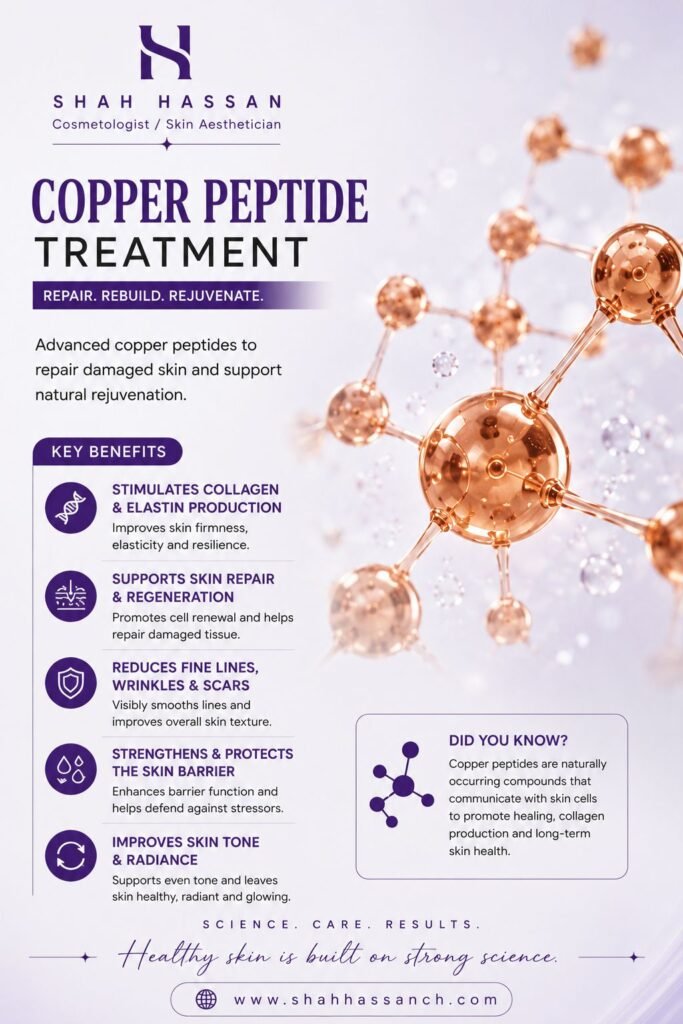
What Is a Copper Peptide and How Does It Work on the Skin?
Copper peptides are naturally occurring compounds found in small amounts in human plasma, saliva, and urine. The most studied form is GHK-Cu (glycyl-L-histidyl-L-lysine copper), a tripeptide that binds to copper ions and plays a critical role in skin repair and regeneration.
When applied topically or used in professional treatments, copper peptides signal the skin to behave in a younger, healthier way. They essentially communicate with your cells and instruct them to repair damage, build new structural proteins, and calm inflammation.
The key biological actions of copper peptide treatment include:
- Stimulating the production of collagen types I and III, the main proteins responsible for skin firmness
- Boosting elastin synthesis, which keeps skin supple and resilient
- Activating glycosaminoglycans, including hyaluronic acid, for deeper hydration
- Promoting the activity of antioxidant enzymes that protect cells from free radical damage
- Regulating matrix metalloproteinases (MMPs), which break down damaged collagen and allow healthy new collagen to form
- Reducing inflammation that accelerates skin aging
What makes copper peptide treatment particularly impressive is that it does not just mask the signs of aging. It actively rebuilds the skin’s structural foundation at a cellular level.
Why Is Copper Peptide Treatment Considered One of the Most Effective Anti-Aging Approaches?
Many anti-aging ingredients work on one pathway. Retinoids increase cell turnover. Vitamin C brightens and protects. Hyaluronic acid hydrates. Copper peptide treatment is unique because it works across multiple pathways simultaneously, making it more comprehensive than most single-ingredient approaches.
Here is a practical comparison of how copper peptides compare to other popular anti-aging treatments:
| Ingredient or Treatment | Primary Action | Suitable for Sensitive Skin | Stimulates Collagen | Anti-Inflammatory |
| Copper peptides | Multi-pathway regeneration | Yes | Yes | Yes |
| Retinoids | Cell turnover | No (can irritate) | Yes | Partially |
| Vitamin C | Antioxidant protection | Depends on form | Indirectly | Partially |
| Niacinamide | Barrier repair and brightening | Yes | Minimally | Yes |
| Hyaluronic acid | Surface hydration | Yes | No | No |
| PRP therapy | Growth factor delivery | Yes | Yes | Yes |
The combination of collagen stimulation, antioxidant activity, and anti-inflammatory effects makes copper peptide treatment exceptionally well-rounded for patients dealing with fine lines, sagging skin, uneven texture, or chronic skin inflammation.
What Skin Concerns Does Copper Peptide Treatment Actually Address?
Copper peptide treatment is not a one-trick ingredient. It addresses a surprisingly wide range of concerns that patients bring to dermatology clinics every day.
Anti-Aging and Skin Rejuvenation
- Softening of fine lines and deeper wrinkles
- Improved skin firmness and elasticity
- Reduction in skin laxity around the jawline, neck, and eyes
- Overall improvement in skin density and thickness
Skin Repair and Healing
- Accelerated recovery after laser treatments, chemical peels, and microneedling
- Reduction in post-inflammatory redness and irritation
- Improvement in the appearance of scars, including acne scars
- Support for skin barrier repair in patients with compromised skin
Brightening and Texture Improvement
- More even skin tone over consistent use
- Refined pore appearance
- Smoother skin texture with regular copper peptide application
- Reduction in hyperpigmentation associated with chronic inflammation
Hair and Scalp Health
- Copper peptide treatments for the scalp have shown promising results in supporting hair follicle health
- Improved hair density and thickness with regular use
- Reduction in scalp inflammation associated with hair thinning
- Support for hair growth cycles, particularly in patients with early-stage androgenetic alopecia
How Is Copper Peptide Treatment Delivered in a Professional Setting?
One of the reasons patients seek out professional copper peptide treatment rather than relying solely on over-the-counter products is the depth and precision of delivery. Here is how dermatologists and aesthetic specialists administer this treatment:
Topical application after microneedling This is one of the most popular protocols. Microneedling creates controlled micro-injuries in the skin that briefly open microchannels. When copper peptide serums are applied immediately after, they penetrate far deeper than they would on intact skin. The combination amplifies both the microneedling results and the peptide’s regenerative effects.
Mesotherapy injections In this technique, a copper peptide solution is injected in tiny amounts across the treatment area using fine needles. This delivers the active ingredient directly into the dermis where collagen-producing fibroblasts are found.
Iontophoresis Some clinics use a low-level electrical current to drive copper peptides deeper into the skin without needles. This is particularly useful for patients who prefer a non-invasive approach.
Standalone topical protocol For patients who are not candidates for needles or those beginning their skincare journey, a high-concentration copper peptide serum applied as part of a structured skincare routine can deliver meaningful results over a consistent period of three to six months.
When Should You Start Using Copper Peptide Treatment?
This is a question that comes up frequently in consultations. The honest answer is that copper peptide treatment is beneficial at almost any adult age, but the timing of when you start affects what kind of results you can expect.
In your twenties: Starting copper peptide treatment early is an excellent preventive strategy. At this stage, it helps maintain the skin’s existing collagen levels, protects against environmental damage, and builds a foundation of long-term skin health.
In your thirties: This is when collagen production begins to slow noticeably. Copper peptide treatment helps counteract that decline, supporting firmness and preventing the early formation of deeper lines.
In your forties and beyond: Professional copper peptide treatments combined with in-clinic procedures like microneedling, laser, or exosome therapy can deliver significant visible improvement in skin quality, firmness, and radiance even when significant aging is already present.
There is no age that is too late to benefit from copper peptide treatment. The skin retains its ability to respond to regenerative signals throughout life.
How Do You Choose the Right Copper Peptide Product or Treatment?
Not all copper peptide formulations are created equal. Here is what to look for when selecting a product or clinic:
For at-home products:
- Look for GHK-Cu listed clearly among the top ingredients
- Choose stable formulations with an appropriate pH (between 6 and 7 is ideal)
- Avoid combining with high-dose vitamin C or acids in the same step, as these can destabilize the copper complex
- Serums and creams tend to be more effective delivery formats than toners or mists
For professional treatments:
- Confirm that the clinic uses pharmaceutical-grade copper peptide preparations
- Ask whether the treatment is standalone or combined with microneedling or mesotherapy
- Ensure the provider has experience specifically with peptide-based regenerative treatments
- Look for clinics that assess your skin before recommending a protocol
What Results Should You Realistically Expect from Copper Peptide Treatment?
Setting realistic expectations is a sign of a trustworthy provider, so here is an honest timeline of what most patients experience:
- Weeks 1 to 2: Skin may feel more hydrated and appear slightly more radiant. These early changes reflect improved hydration and reduced inflammation.
- Weeks 3 to 6: Texture improvements become visible. Pores may appear smaller, and skin tone begins to even out. Fine lines around the eyes and lips may soften.
- Months 2 to 3: Collagen remodeling effects become apparent. Skin feels firmer to the touch, and the overall quality of the complexion improves noticeably.
- Months 4 to 6: Full results of a consistent copper peptide treatment protocol are visible. Skin density, firmness, and radiance are significantly improved.
Results are cumulative and progressive, which means the longer you maintain a consistent routine or treatment schedule, the better your skin continues to look.
Frequently Asked Questions About Copper Peptide Treatment
Is copper peptide treatment safe for all skin types?
Yes, copper peptide treatment is generally well-tolerated across all skin types, including sensitive, reactive, and rosacea-prone skin. Unlike retinoids, which can cause peeling and irritation, copper peptides typically do not cause significant side effects. Some people experience mild initial redness that resolves within hours. Always perform a patch test before starting any new treatment at home.
Can I use copper peptides with other skincare ingredients?
Copper peptides are compatible with many popular skincare ingredients including hyaluronic acid, niacinamide, ceramides, and peptide complexes. However, they should not be used at the same time as high-concentration vitamin C (ascorbic acid) or strong exfoliating acids, as these can break down the copper complex and reduce effectiveness. Use copper peptide products in a separate step or at a different time of day.
How long does it take to see visible results from copper peptide treatment?
Most people begin to notice improved hydration and radiance within the first two weeks. More significant changes such as firmer skin and softened lines become visible after six to twelve weeks of consistent use. Professional in-clinic treatments produce faster and more dramatic results compared to at-home serums alone.
Is copper peptide treatment suitable for hair loss?
Research into copper peptides for hair loss is genuinely promising. GHK-Cu has been shown to enlarge hair follicles, stimulate hair growth phases, and reduce scalp inflammation. Several studies have compared its efficacy favorably to minoxidil in laboratory settings. Clinical application for hair restoration is increasingly offered at advanced dermatology practices.
Can pregnant or breastfeeding women use copper peptide products?
Copper peptide treatments are generally considered to be among the safer skincare options during pregnancy compared to ingredients like retinoids or hydroquinone. However, because research specific to pregnancy is limited, it is always recommended to consult your obstetrician or dermatologist before introducing any new treatment during pregnancy or while breastfeeding.
How is copper peptide treatment different from regular peptide serums?
Regular peptide serums typically contain signal peptides, carrier peptides, or neurotransmitter-inhibiting peptides that address various skin concerns. Copper peptide treatment specifically involves the GHK-Cu complex, which has a uniquely broad range of regenerative actions backed by decades of independent research. The copper ion component is essential to its mechanism and distinguishes it from general peptide products on the market.
How often should professional copper peptide treatments be done?
The frequency of professional copper peptide treatments depends on the delivery method and your skin goals. When combined with microneedling, sessions are typically spaced four to six weeks apart for a series of three to four treatments. Maintenance sessions every three to six months are recommended after that. Your dermatologist will recommend the most appropriate schedule based on your individual response and goals.
Summary and Next Steps
Copper peptide treatment is one of the most scientifically grounded and versatile options available in modern skincare and aesthetic medicine. Whether you are looking to prevent premature aging, recover from a skin procedure, address hair thinning, or simply improve the overall health and appearance of your complexion, copper peptides offer a compelling, well-researched solution that works with your body’s natural biology rather than against it.
The key to getting the best results is working with a qualified professional who can assess your skin, recommend the right formulation, and design a treatment plan that fits your goals and lifestyle. Whether you start with a professional protocol or a high-quality at-home product, consistency is the most important factor in seeing meaningful change.