
Melasma Treatment in Islamabad: Options, Benefits and Expected Results
A practical guide to understanding melasma, available treatment options, expected results and the importance of long-term skin care.
Brown or grey-brown patches on the cheeks, forehead or upper lip can be frustrating. If pigmentation keeps returning despite using creams or home remedies, you may be dealing with melasma.
The good news is that melasma can often be managed effectively. The important part is choosing the right approach, protecting the skin from triggers and having realistic expectations about how long improvement can take.
What is the best melasma treatment in Islamabad?
The best approach is usually a personalised, doctor-guided plan rather than one procedure. Treatment may combine daily sun and visible-light protection, prescription topical products and, when appropriate, superficial chemical peels, oral medication or carefully selected laser settings.
Customer Review on Melasma Treatment from Shah Hassan Skin & Hair Aesthetics..
📋 Table of Contents
- What Is Melasma?
- What Causes Melasma and What Triggers It?
- Why Proper Diagnosis Matters
- Melasma Treatment Options
- Treatment Options at a Glance
- Benefits of a Doctor-Guided Approach
- What Results Can You Expect?
- Safe Melasma Care at Home
- How to Choose the Best Treatment in Islamabad
- Melasma During Pregnancy and Breastfeeding
- When Should You Seek Professional Assessment?
- Frequently Asked Questions
What Is Melasma?
Melasma is a common acquired skin condition that causes symmetrical, flat brown to grey-brown patches, mainly on the face. It develops when pigment-producing cells become overactive in certain areas.
Melasma is not contagious, is not painful and is not cancerous. However, it can affect confidence and may require consistent long-term management.
Cheeks
One of the most common areas where pigmentation appears.
Forehead
Sun exposure can make forehead pigmentation more noticeable.
Upper Lip
Dark patches may develop above the upper lip.
Nose
The nose can also develop visible pigmentation.
Chin
The jawline and chin may be affected in some people.
Symmetrical
Melasma often appears in a similar pattern on both sides.
What Causes Melasma and What Triggers It?
There is no single cause of melasma. Several factors can work together in people who are genetically prone to pigmentation.
Why Proper Diagnosis Matters Before Treatment
Not every dark patch is melasma. Post-inflammatory pigmentation, sun spots, medication-related pigmentation and other conditions can look similar but may require different treatment.
⚠ Diagnosis Comes First
Treating the wrong condition or treating pigmentation too aggressively can irritate the skin and may make the pigmentation darker. A proper assessment helps determine the most appropriate treatment plan.
Melasma Treatment Options: What Works?
Melasma treatment generally focuses on three goals: reducing exposure to triggers, gradually reducing existing pigmentation and preventing relapse.
Daily Sun & Visible-Light Protection
Sun protection is the foundation of melasma management. A broad-spectrum sunscreen with SPF 30 or higher should be used consistently.
- Use sunscreen every morning.
- Consider tinted sunscreen containing iron oxides.
- Reapply every 2–3 hours when outdoors.
- Use a hat or umbrella for additional protection.
Prescription Topical Treatments
Topical products are commonly used as first-line treatment. The choice depends on skin sensitivity, pigmentation and individual circumstances.
- Hydroquinone
- Triple-combination creams
- Azelaic acid
- Tranexamic acid
- Kojic acid
- Vitamin C and niacinamide
Superficial Chemical Peels
Gentle peels using ingredients such as glycolic, salicylic, lactic or mandelic acid may support pigment fading when appropriately combined with a wider treatment plan.
Strong or poorly timed peels may cause irritation and worsen pigmentation.
Adjunct TreatmentOral Tranexamic Acid
Oral tranexamic acid has shown promising results for some stubborn cases. However, it requires proper medical assessment because it may not be appropriate for everyone.
Selected Laser & Light Treatments
Some low-energy laser approaches have been studied for resistant pigmentation. Results vary and treatment must be selected carefully.
Heat and inflammation can sometimes worsen pigmentation or cause rebound darkening.
Mixed EvidenceEmerging & Supportive Options
Microneedling with topical agents, oral antioxidants and newer topical formulations are being studied.
These options are better viewed as supportive approaches while evidence continues to develop.
Emerging Evidence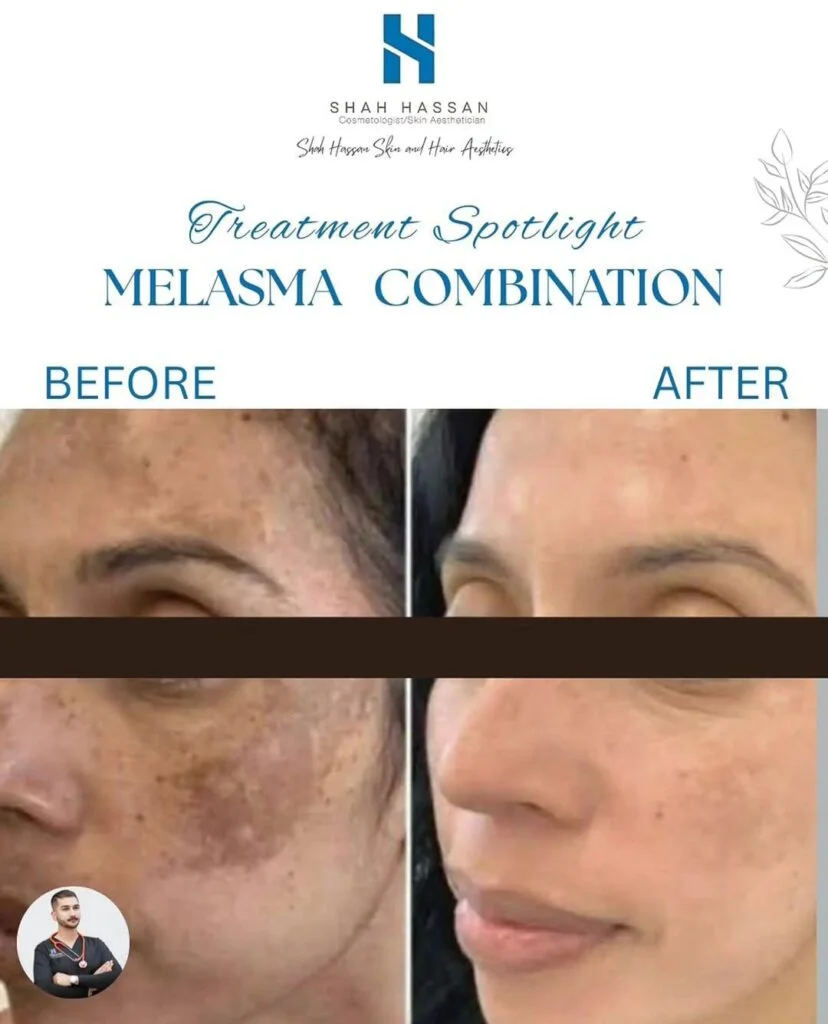
Treatment Options at a Glance
| Option | Role | Evidence | Main Consideration |
|---|---|---|---|
| Sun protection | Essential foundation | Strong | Needs daily consistency |
| Hydroquinone / combination creams | First-line pigment reduction | Strong | Medical supervision recommended |
| Azelaic acid & other topicals | Alternative/supportive | Moderate to good | Mild irritation may occur |
| Superficial peels | Adjunct treatment | Moderate | Over-treatment may worsen pigmentation |
| Oral tranexamic acid | Selected stubborn cases | Promising | Blood-clot risk; prescription only |
| Selected lasers | Resistant cases | Mixed | Rebound pigmentation is possible |
| Microneedling/newer options | Supportive | Emerging | Evidence remains limited |
Benefits of a Doctor-Guided Approach
What Results Can You Realistically Expect?
Melasma does not usually disappear overnight. Improvement develops gradually and response varies from person to person.
Weeks 1–4 — Getting Started
The focus is on establishing consistent sun protection and beginning the recommended treatment routine. Some people may notice little visible change during this stage.
Weeks 4–8 — Early Improvement
Many people begin to notice lighter or less intense pigmentation, although results can vary.
Weeks 8–12+ — More Visible Change
With consistent treatment and protection, more noticeable fading may occur.
Long Term — Maintenance
Melasma can return, especially after sun exposure, hormonal changes, heat or stopping maintenance care. Long-term management is therefore important.
Why Results Vary
Deeper pigmentation may respond more slowly. Consistent protection and following the recommended plan are important factors in maintaining improvement.
A successful outcome is usually significant fading and better long-term control rather than a promise of permanent removal. No treatment can honestly guarantee that melasma will never return.
Safe Melasma Care at Home
Protect Daily
Apply sunscreen every morning and reapply when outdoors.
Keep It Gentle
Avoid harsh scrubs, aggressive exfoliation and irritating home remedies.
Limit Heat
Reduce unnecessary heat exposure where possible.
Avoid Unverified Creams
Be cautious with unregulated skin-lightening products.
- Use sunscreen consistently.
- Keep your skincare routine simple and gentle.
- Avoid lemon juice, baking soda and harsh DIY remedies.
- Avoid aggressive hair removal if it irritates pigmentation-prone areas.
- Wear a hat or use an umbrella outdoors.
- Do not start, stop or restart prescription products without medical advice.
How to Choose the Best Melasma Treatment in Islamabad
The best clinic is not necessarily the one promising the fastest whitening. A good treatment provider should focus on accurate assessment, realistic expectations, safety and long-term management.
At Shah Hassan Skin & Hair Aesthetics in Islamabad, the treatment approach begins with understanding your skin, history and goals. The options discussed depend on what is clinically appropriate for you.
Melasma During Pregnancy and Breastfeeding
Melasma that begins during pregnancy may fade after delivery, but it can also persist. Some commonly used treatments are not generally recommended during pregnancy or breastfeeding without medical advice.
⚠ Pregnancy & Breastfeeding
If you are pregnant, planning pregnancy or breastfeeding, speak with a qualified doctor before using treatment products. Strict sun protection and an appropriate care plan are important.
When Should You Seek Professional Assessment?
Consider booking an assessment if:
- Dark patches are spreading or becoming darker.
- Over-the-counter products are not helping.
- Your products are irritating your skin.
- You are unsure whether the pigmentation is melasma.
- A patch is raised, bleeding or rapidly changing.
- Pigmentation is affecting your confidence or quality of life.
Looking for Melasma Treatment in Islamabad?
If pigmentation is affecting your confidence, a proper assessment can help you understand your options and create a treatment plan suited to your skin.
Book Your ConsultationFrequently Asked Questions About Melasma Treatment
Can melasma be cured permanently?
Melasma can often be improved significantly, but permanent disappearance cannot be guaranteed. It can return because of sun exposure, hormonal changes, heat or stopping maintenance care.
How long does melasma treatment take to show results?
Early changes may become noticeable within about 4 to 8 weeks. More visible improvement commonly takes 8 to 12 weeks or longer. Deeper or long-standing pigmentation may take several months.
Is laser treatment safe for melasma?
Selected laser treatments may help some resistant cases, but they are not usually the first treatment choice. Heat and inflammation can sometimes cause rebound pigmentation, particularly in brown skin.
Which cream is best for melasma?
There is no single cream that is best for everyone. Common options include hydroquinone, combination creams, azelaic acid and other pigment-reducing ingredients. The appropriate choice depends on your skin and should be guided by a qualified professional.
Can sunscreen alone treat melasma?
Sunscreen alone will not usually clear existing melasma, but it is essential for preventing worsening and reducing relapse. Treatment is generally much less effective without consistent protection.
Does melasma go away after pregnancy?
Pregnancy-related melasma may fade after delivery in some people, while it can persist in others. Medical advice is important before using any treatment during pregnancy or breastfeeding.
Why does melasma come back after treatment?
Skin that is prone to melasma remains sensitive to triggers such as UV light, visible light, heat and hormonal changes. A long-term maintenance plan can help reduce the chance and severity of relapse.
Final Takeaway
Melasma is common and manageable, but it requires patience and consistency. The most reliable approach combines accurate assessment, daily sun protection, carefully selected treatment and ongoing maintenance.
If you are looking for the best melasma treatment in Islamabad, focus on a personalised plan rather than a quick-fix procedure or unverified whitening product. Your skin type, pigmentation pattern, sensitivity and medical history should all be considered before treatment.
Start With a Personalised Assessment
Discuss your pigmentation, treatment options and expected results with the team at Shah Hassan Skin & Hair Aesthetics.
Contact NowMedical note: This article is for general educational purposes and does not replace personal medical advice. Treatment suitability, risks and results vary between individuals. Prescription treatments should only be used under appropriate medical guidance.