
Melasma Treatment Near Me: How to Find the Right Specialist and Finally Clear Your Skin
Dark patches on your face that refuse to fade no matter how many creams you try can be deeply frustrating. You are not alone. Millions of people across Pakistan and worldwide deal with melasma every single day, and many of them spend years searching for an effective solution. If you have typed melasma treatment near me into a search engine, you are already taking the right step. This guide will walk you through everything you need to know before booking your first appointment.
Melasma treatment near you typically includes topical prescription creams, chemical peels, laser therapy, and microneedling performed by a certified dermatologist. The best results come from combining treatments with strict sun protection. Finding a qualified local specialist is essential because melasma requires a personalized approach based on your skin tone and pigmentation depth.
What Is Melasma and Why Does It Keep Coming Back?
Melasma is a common skin condition that causes brown, grey-brown, or blue-grey patches to appear on the face, most often on the cheeks, forehead, nose bridge, upper lip, and chin. It develops when melanocytes, the pigment-producing cells in your skin, become overactive and produce more melanin than normal in certain areas.
Several factors are known to trigger or worsen melasma:
- Sun exposure: Ultraviolet and visible light from the sun stimulate melanocytes and are the most significant trigger for melasma flare-ups
- Hormonal changes: Pregnancy, oral contraceptives, and hormonal replacement therapy are among the most common causes, which is why melasma is sometimes called the mask of pregnancy
- Heat exposure: Even infrared heat from cooking, hot showers, or saunas can worsen melasma independently of UV light
- Genetic predisposition: If melasma runs in your family, you are significantly more likely to develop it yourself
- Certain medications: Anti-seizure drugs and some blood pressure medications can increase photosensitivity and trigger pigmentation
The reason melasma keeps returning for so many people is that it is a chronic condition rooted in how your melanocytes respond to specific triggers. Treating the visible pigment is only one part of the solution. Managing the underlying triggers is equally important, and this is something a qualified specialist helps you do over time.
Why Does Melasma Require Professional Treatment Rather Than Over-the-Counter Products?
Many people spend months using brightening creams purchased from pharmacies or online before they finally search for melasma treatment near me. The frustration is completely understandable. Over-the-counter products contain ingredients at concentrations too low to make a meaningful difference in true melasma, and some popular brightening ingredients like high-dose kojic acid can even cause irritation that worsens pigmentation on darker skin tones.
Professional treatment matters for these specific reasons:
- Accurate diagnosis: Not all dark patches are melasma. A dermatologist uses a Wood lamp examination and sometimes dermoscopy to confirm the diagnosis and determine whether the pigmentation is epidermal, dermal, or mixed, because the depth of pigment determines which treatment will actually work
- Prescription-strength formulations: Topical treatments like hydroquinone at 4% or above, tretinoin, and azelaic acid at therapeutic concentrations require a prescription and must be used under supervision to avoid side effects
- Procedural treatments: Chemical peels, laser therapy, and microneedling with topical agents can reach pigment that creams cannot, but they require trained hands to avoid triggering post-inflammatory hyperpigmentation on darker skin types
- Long-term management planning: Melasma management is a marathon, not a sprint. A specialist creates a treatment roadmap that evolves with your skin’s response over months and seasons
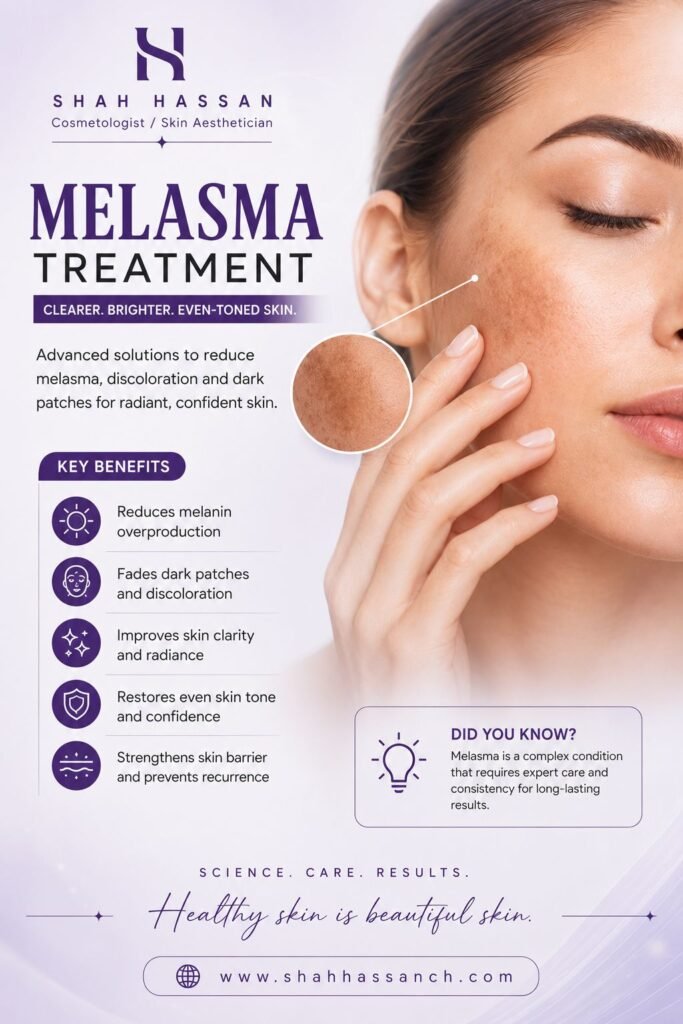
What Are the Most Effective Melasma Treatments Available Near You?
The range of melasma treatments available at reputable dermatology and aesthetic clinics today is broader and more effective than it was even five years ago. Your specialist will recommend a combination approach tailored to your specific pigmentation depth, skin tone, and lifestyle.
| Treatment Type | How It Works | Sessions Needed | Best For |
| Topical Therapy (Hydroquinone, Tretinoin, Azelaic Acid) | Inhibits melanin production and accelerates cell turnover | Daily use over 3 to 6 months | Epidermal melasma, maintenance |
| Chemical Peels (Glycolic, Mandelic, Tranexamic) | Exfoliates pigmented skin layers and brightens tone | 4 to 6 sessions | Mild to moderate melasma |
| Laser Therapy (Q-Switch, Picosecond) | Targets melanin with precise wavelengths | 4 to 8 sessions | Stubborn, deep pigmentation |
| Microneedling with Tranexamic Acid | Creates microchannels for deeper active ingredient delivery | 4 to 6 sessions | Mixed and dermal melasma |
| Oral Tranexamic Acid | Reduces melanocyte stimulation systemically | 3 to 6 months of daily use | Severe or recurrent melasma |
The most important thing to understand is that no single melasma treatment works in isolation. The gold standard approach combines a topical maintenance regimen with periodic professional procedures and, most critically, daily broad-spectrum sun protection with SPF 50 or higher.
How Do You Find the Best Melasma Treatment Near You?
When you search for melasma treatment near me, the number of results can feel overwhelming. Not every clinic that appears in search results has the specialized knowledge and equipment needed to treat melasma safely and effectively, particularly on South Asian skin tones that are more prone to post-inflammatory hyperpigmentation if the wrong approach is used.
Here is a practical checklist to help you evaluate your options:
- Check the practitioner’s qualifications: Look for a board-certified dermatologist or a cosmetic physician with documented training in pigmentation disorders and experience treating patients with Fitzpatrick skin types IV to VI
- Ask about their diagnostic process: A thorough clinic will examine your skin under a Wood lamp or dermatoscope before recommending any treatment, not simply look at you in normal light and suggest a package
- Inquire about their laser equipment: If laser treatment is recommended, ask specifically which device they use. Picosecond lasers and Q-switched lasers are safer for darker skin tones than older ablative devices
- Request to see before and after photographs: A reputable clinic will have documented patient outcomes they can share during your consultation
- Evaluate the consultation quality: A trustworthy specialist will spend time understanding your medical history, current medications, sun exposure habits, and previous treatment history before making recommendations
- Look for realistic expectations: Any practitioner who promises complete permanent removal of melasma in a single session is overstating what the science supports. Melasma can be significantly lightened and managed, but long-term maintenance is always part of the plan
When Is the Right Time to Start Melasma Treatment?
The best time to begin melasma treatment is during the cooler months of the year when sun exposure is naturally lower and the risk of post-treatment sun damage is reduced. In Pakistan, the window between October and February offers ideal conditions for starting laser or peel-based treatments.
However, there are also situations where starting sooner rather than later makes sense regardless of the season:
- Your melasma has been present for more than six months without improvement from over-the-counter products
- Your pigmentation is spreading or darkening despite daily sunscreen use
- The patches are affecting your confidence and quality of life significantly
- You are planning a major event and want visible improvement within a specific timeline
- Your melasma appeared or worsened after starting hormonal contraception and your gynaecologist has already adjusted your medication
Starting treatment earlier generally produces better outcomes because freshly formed epidermal melasma is more responsive to topical therapy than long-standing mixed or dermal pigmentation that has been present for years.
What Should You Expect During and After Melasma Treatment?
Understanding the realistic journey of melasma treatment helps you stay committed during the process, which can sometimes feel slow in the early weeks.
During treatment: Most topical regimens cause mild dryness, flaking, or sensitivity during the first two to four weeks as your skin adjusts to prescription-strength ingredients. This is normal and settles down. Chemical peel sessions may leave the skin slightly pink and flaky for three to five days afterward. Laser sessions can cause mild redness and warmth for 24 to 48 hours.
After the first month: Most patients notice that their skin tone feels more even and brighter overall, even before the patches have fully faded. This early brightening effect comes from accelerated cell turnover.
After two to three months: Visible reduction in the depth and intensity of pigmentation becomes apparent. Patches that were dark brown often shift toward a lighter, more diffuse appearance.
After four to six months: With consistent treatment and strict sun protection, significant clearing is achievable for most patients with epidermal melasma. Dermal or mixed melasma takes longer and may require ongoing maintenance sessions.
How Do You Maintain Results and Prevent Melasma from Returning?
One of the most important conversations to have with your dermatologist after melasma treatment is about long-term maintenance. Melasma has a high recurrence rate without a consistent prevention strategy. The following habits are non-negotiable for keeping your results intact:
- Daily broad-spectrum SPF 50 or higher: Apply every single morning regardless of whether you plan to go outdoors. Visible light from indoor lighting and screens can also stimulate melanocytes in people with melasma
- Physical sunscreens with zinc oxide or titanium dioxide: These provide better protection against visible light than chemical filters alone and are particularly recommended for South Asian skin tones
- Maintenance topical therapy: Your dermatologist will likely recommend continuing a milder version of your topical regimen even after visible clearing to prevent relapse
- Avoiding heat triggers: Keep showers lukewarm, step away from direct heat sources like ovens and grills, and use a cooling mist after exercise
- Seasonal maintenance treatments: A professional peel or microneedling session every three to four months helps sustain results and addresses any early recurrence before it becomes established
Frequently Asked Questions About Melasma Treatment Near Me
What is the most effective melasma treatment currently available?
The most effective approach to melasma treatment is a combination protocol that includes prescription topical therapy (most commonly a triple combination of hydroquinone, tretinoin, and a mild corticosteroid), professional peels or laser treatments, oral tranexamic acid in moderate to severe cases, and daily SPF 50 sunscreen. No single treatment produces the best results in isolation.
Can melasma be permanently cured?
Melasma cannot be permanently cured because it is a chronic condition influenced by ongoing factors like sun exposure and hormones. However, with consistent melasma treatment and proper sun protection, it can be significantly lightened and kept under control so that it does not noticeably affect your appearance. Many patients achieve and maintain near-complete clearance for years with the right maintenance routine.
Is laser treatment safe for melasma on dark skin?
Yes, specific laser technologies are safe and effective for darker skin tones when used by an experienced practitioner. Picosecond lasers and low-fluence Q-switched Nd:YAG lasers are considered the safest options for Fitzpatrick skin types IV to VI. The key is choosing a clinic with the right equipment and a practitioner who has specific experience treating pigmentation in darker skin.
How long does melasma treatment take to show results?
Most patients notice initial brightening within four to six weeks of starting a prescription topical regimen. More significant reduction in patch visibility takes two to three months of consistent use combined with sun protection. Full results from a combination protocol including professional treatments are typically visible after four to six months. Patience and consistency are the two most important factors in achieving a good outcome.
Should I stop my birth control to treat melasma?
This is a decision that should be made in collaboration with both your dermatologist and your gynaecologist. Hormonal contraception is a recognized trigger for melasma in some women, and switching to a non-hormonal method can reduce the hormonal stimulus driving the pigmentation. However, melasma treatment can still be highly effective even if you continue hormonal contraception, particularly when paired with strict sun protection and professional therapy. Your doctor will help you weigh the options.
Can men get melasma and seek treatment near them?
Yes, melasma affects men as well, though it is more common in women. Men who develop melasma typically experience it from sun exposure, genetic predisposition, or certain medications. The treatment approach is essentially the same as for women, and men benefit equally from professional melasma treatment combined with daily sun protection. If you are a man experiencing unexplained facial pigmentation, consulting a qualified dermatologist is strongly recommended.
Summary: Taking the First Step Toward Clearer Skin
Finding reliable melasma treatment near me is about more than locating the nearest clinic. It is about finding a qualified specialist who understands the complexity of this condition, the nuances of your skin tone, and the commitment required to achieve lasting results. Melasma responds best to a personalized, combination approach delivered consistently over several months.
Whether you are just beginning to notice pigmentation or you have been managing melasma for years without satisfactory results, the right professional guidance makes all the difference. Explore your options with a dermatologist you trust, commit to your sun protection routine, and give your treatment plan the time it needs to work.
For expert, personalized melasma treatment delivered by qualified professionals who understand Pakistani skin tones and the specific challenges of our climate and lifestyle, visit shahhassanch.com. Your journey to clearer, more confident skin starts with a single consultation.